The education system in Papua New Guinea (PNG) has undergone significant reforms in the past few years. To improve education standards the Department of Education introduced the Standards Based Curriculum (SBC) in 2015 to replace the previous Outcome Based Education (OBE) system. In the beginning years of schooling (Elementary) this curriculum introduced English as a compulsory subject and phonics as a primary means to teach it. The SBC also sets standards for teacher training and professional development, student assessments, school inspections and school governance.

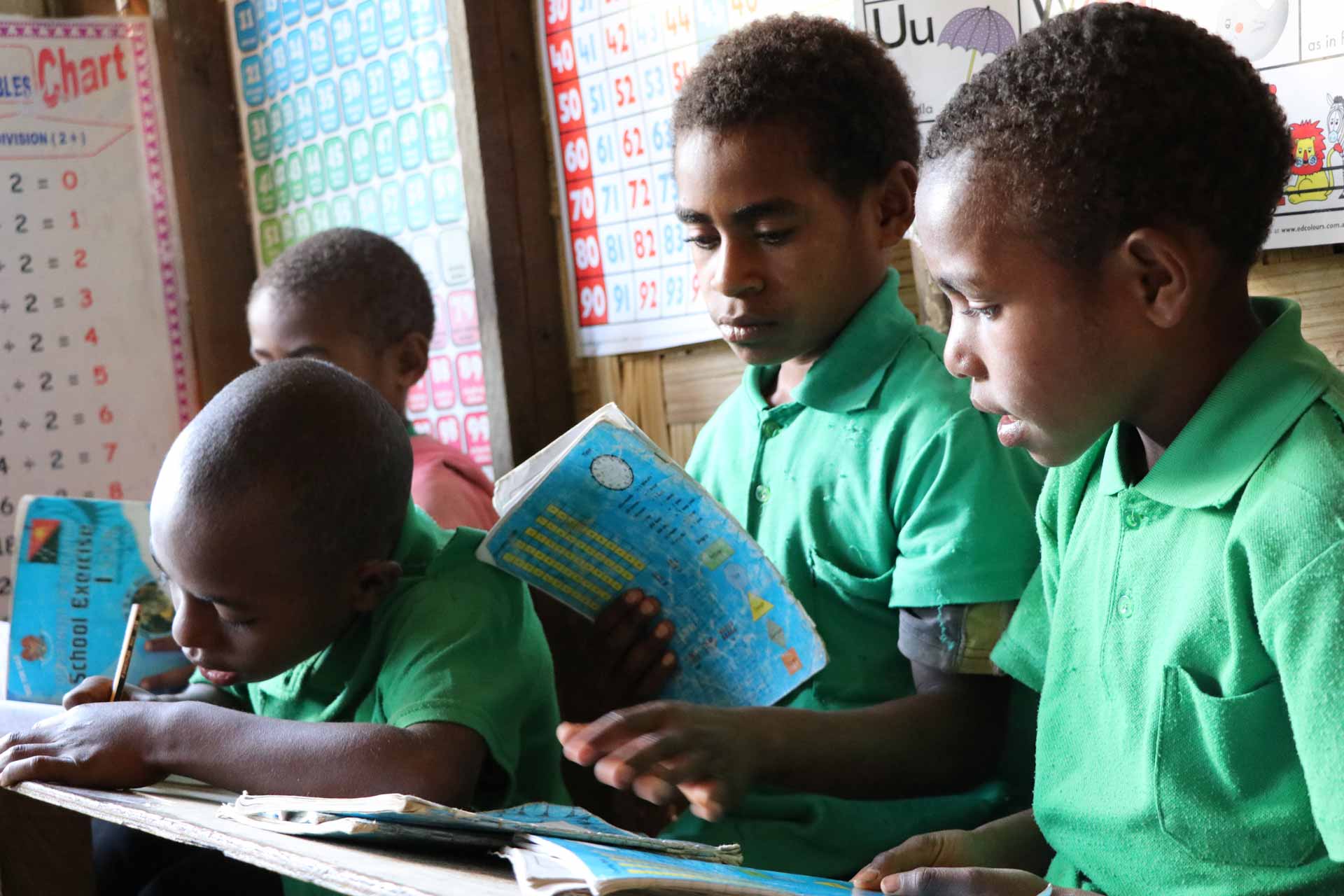
In PNG, education formally begins at age six with Elementary school, which has three-year levels – Elementary Preparatory (EP), Elementary One (E1), and Elementary Two (E2). The reform system in Elementary Education created challenges for students and teachers and it was identified that further support was required to strengthen the quality of education.

Parents and community play an important role in elementary schooling and their links to the school and the teachers can ensure that the students are fully supported. Schools especially in remoter areas face a number of challenges including access to resources, trained teachers and support to implement the curriculum. Girls can face various barriers to attending schools. The Pikinini Kisim Save Project supports the strengthening of skills and capacity of teachers, community leaders, existing education stakeholders and service providers. The project provides resources and support to schools and communities more broadly, working closely with the Provincial Education Departments in each of the provinces.

This educational knowledge hub provides links to materials provided by the Department of Education, training materials by the Pikinini Kisim Save Project and other providers, and shares stories from teachers, parents and education coordinators to build a knowledge base around how the quality of education can be improved within the given contexts.